Key takeaways
- One brand with a 2-order minimum made a customer pay a $20 fee to cancel after her first order.
- Adobe sold a monthly plan that turned out to be a 12-month contract, and the FTC took it to court.
- A forced second order buys one more shipment and loses the customer for good, so we never build it for clients.
“They will not allow it without charging a fee of $20.”
That’s a customer who tried to cancel a subscription after her first order.
She had to pay to leave.
The widget says one thing and the rule says another
The subscribe widget reads “Save 40% on your first order.” Then “Skip or pause anytime.”
Then, in small grey print, “*Minimum of 2 orders required.”
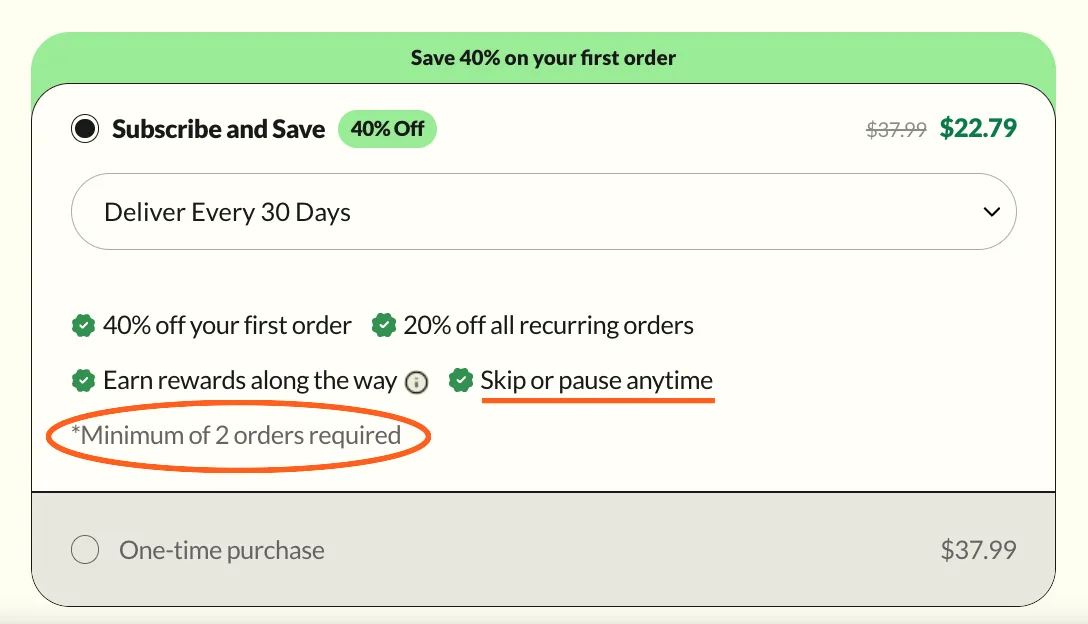
The rule is disclosed on the page. The $20 fee is the part reviewers say is not written anywhere. One of them put it this way: “This is not even written anywhere.”
What customers wrote
Another customer of the same brand wrote, “I was still told that I had to pay for the third order.”
She had asked to cancel after the first.
This is a $50 million brand. Its rule is a minimum of two orders, and if you want out early, you pay a fee.
Smaller brands are copying it
I found one with the same rule in its written policy: “Your subscription cannot normally be cancelled before the minimum 2 deliveries have been completed.”
Early cancellation is “reviewed on a case-by-case basis.”
Adobe did a version of this
A monthly plan turned out to be a 12-month contract, and the FTC took them to court.
Why a forced second order backfires
A forced second order is not retention. It might work for enterprise software.
But a consumer brand has a hundred competitors, and in the long run this can be fatal. The cons are way bigger than the benefit.
The brand gets one more order. The customer still leaves.
We never advise this for clients. If someone wants to cancel, let them.
One brand I wrote about saves 1 in 3 cancellations without charging anyone to leave.
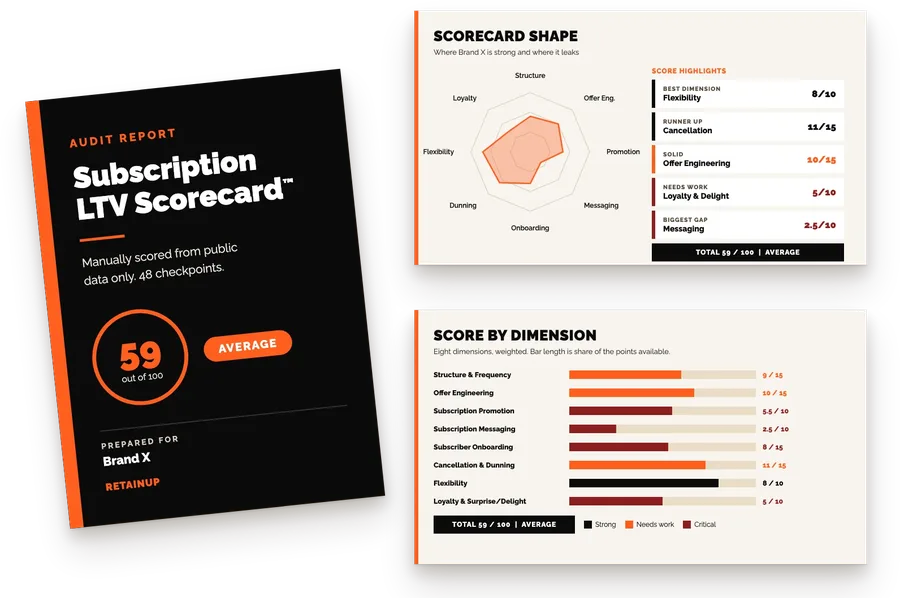
If you want to know how hard it is to cancel your own subscription, get a free subscription audit.
One email a week on subscription retention: the numbers, the strategy, and what to fix first.

Rahi Jain
Rahi Jain is a subscription LTV specialist who helps DTC brands maximize their LTV from subscriptions.
More about Rahi