Key takeaways
- When a BFCM sale gives 30% off one-time against a 20% subscription discount, new customers skip the subscription and take rate drops.
- Good Protein gave subscribers the sale first in their portal, and add-ons went from 18% to 25% of subscription revenue in their BFCM month (via Loop).
- Subscription churn runs at 3.2% a month in November and 4.1 to 4.3% in December and January, per Churned’s 2026 benchmark report.
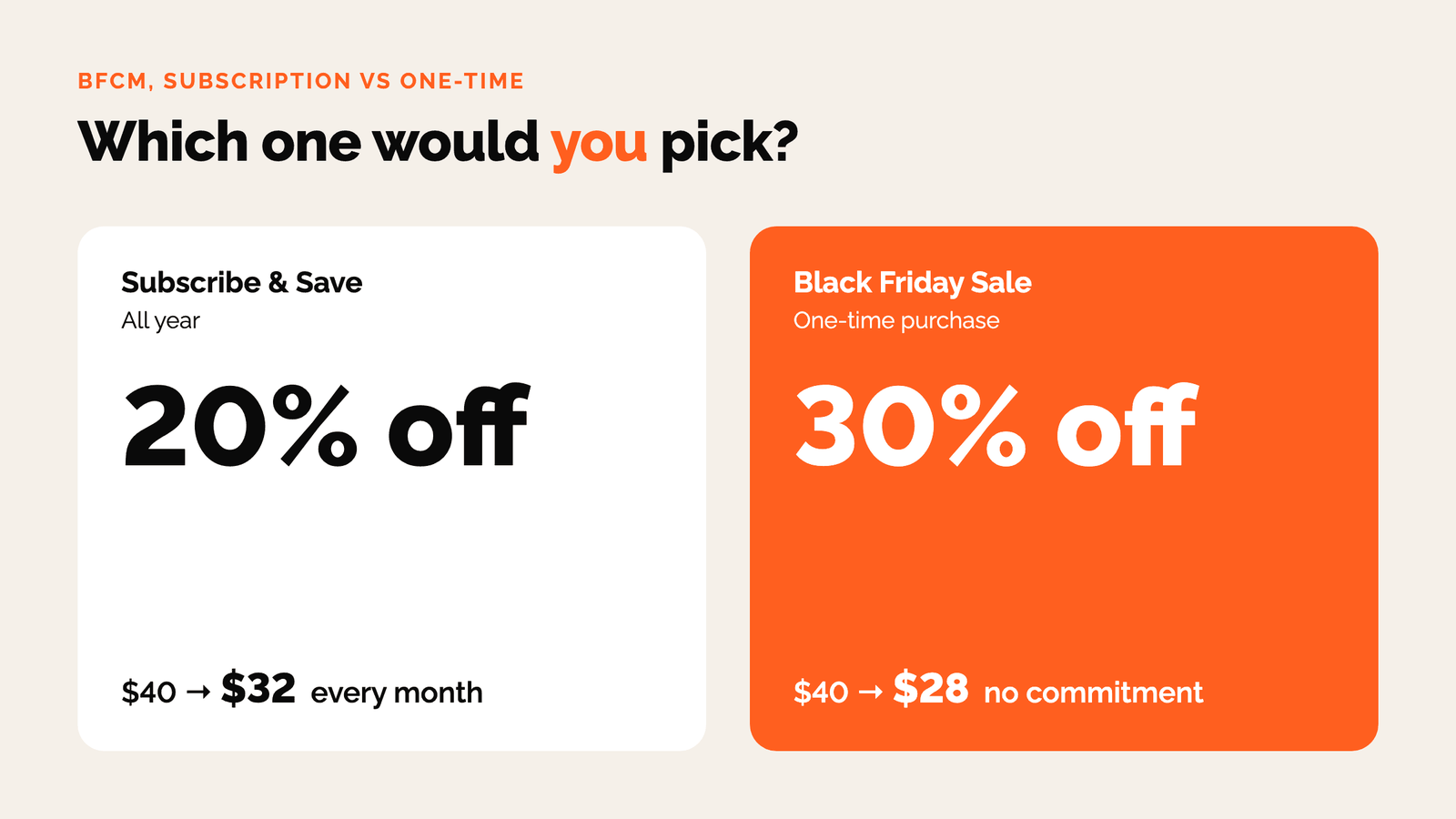
Your subscription is 20% off all year.
Your Black Friday sale is 30% off one-time.
Which one would you pick?
Most of your new customers pick one-time. You buy your biggest cohort of the year at your lowest margin, and most of them never order again.
Then January comes, the BFCM buyers are gone, and the brand wonders why revenue fell off.
You can’t be a subscription-first brand if one-time gets your best deal of the year.
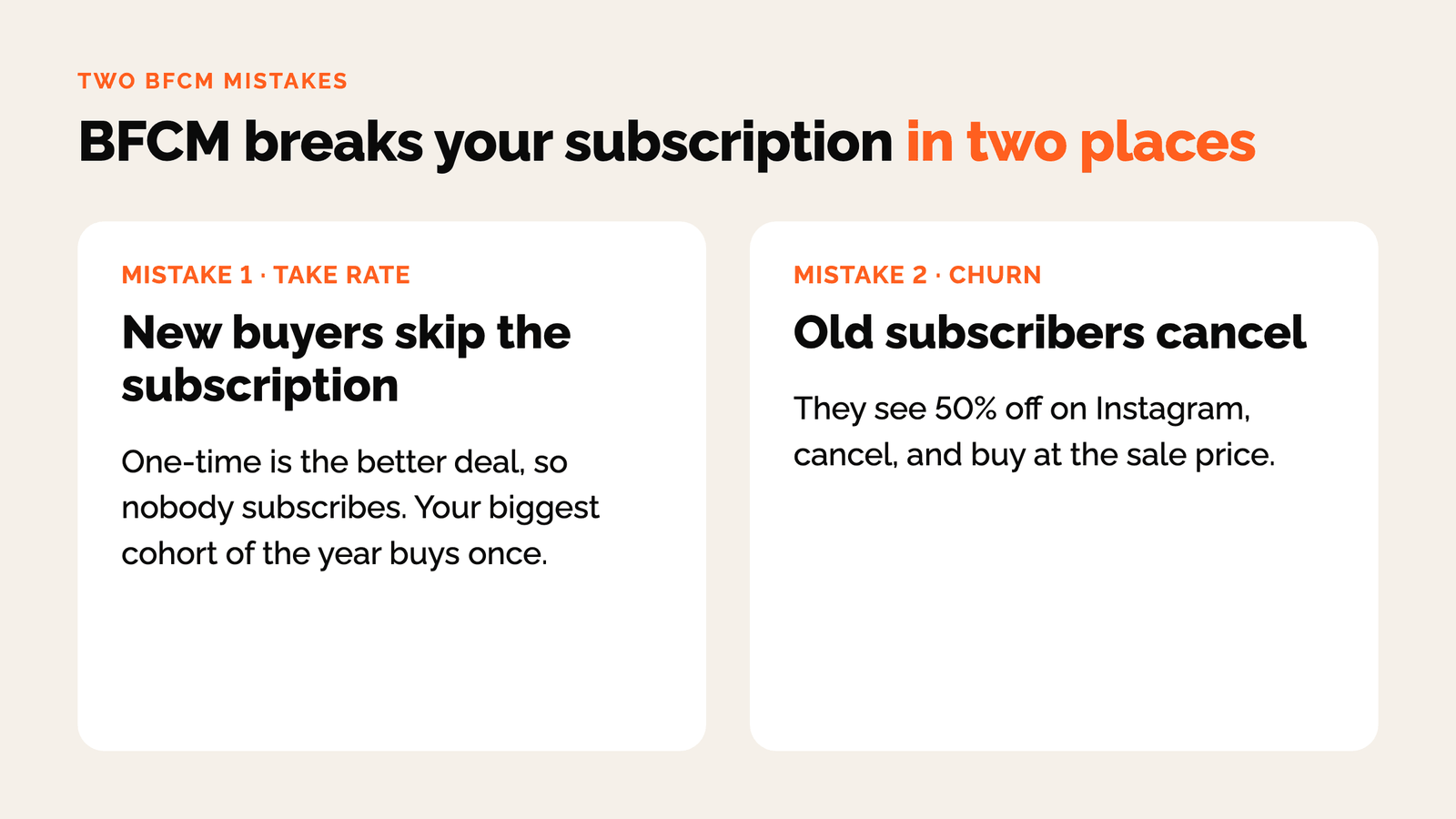
BFCM breaks your subscription in two places:
1. New subscribers skip it.
2. Old subscribers cancel.
Below: the 2 mistakes, 7 fixes for them, and 3 things to do in December and January.
Loop covered a lot of this in their partner BFCM webinar. Worth the hour.
Mistake 1: New buyers skip the subscription
When one-time is the better deal, your take rate drops in the biggest month of the year.
Every one-time buyer is a customer you paid full CAC for, and you get one order back.
A subscriber at a deeper discount still pays you again in December and January. A one-time buyer usually doesn’t.
1. Keep subscription the better deal
If one-time gets 30%, subscription gets more. Or it gets something one-time can’t.
2. Put the sale on a quarterly plan
Run your best deal on a 3-month prepaid plan or a BFCM-only bundle, not on the first box.
When Good Protein’s discount grew with the plan length, 60% of subscribers picked the longer plan (via Loop).
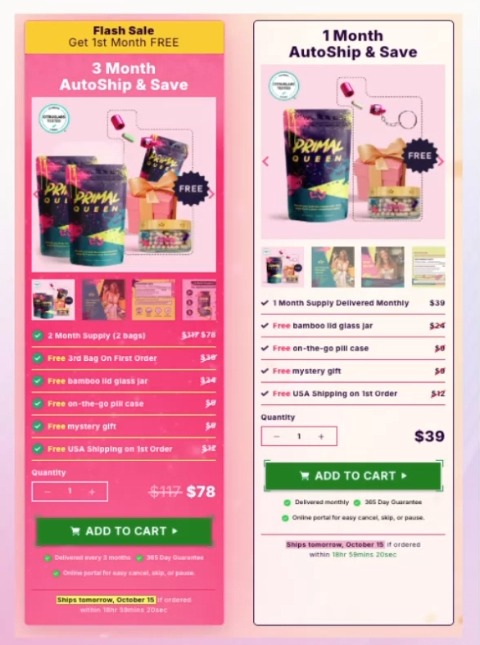
3. Give a welcome kit only with subscription
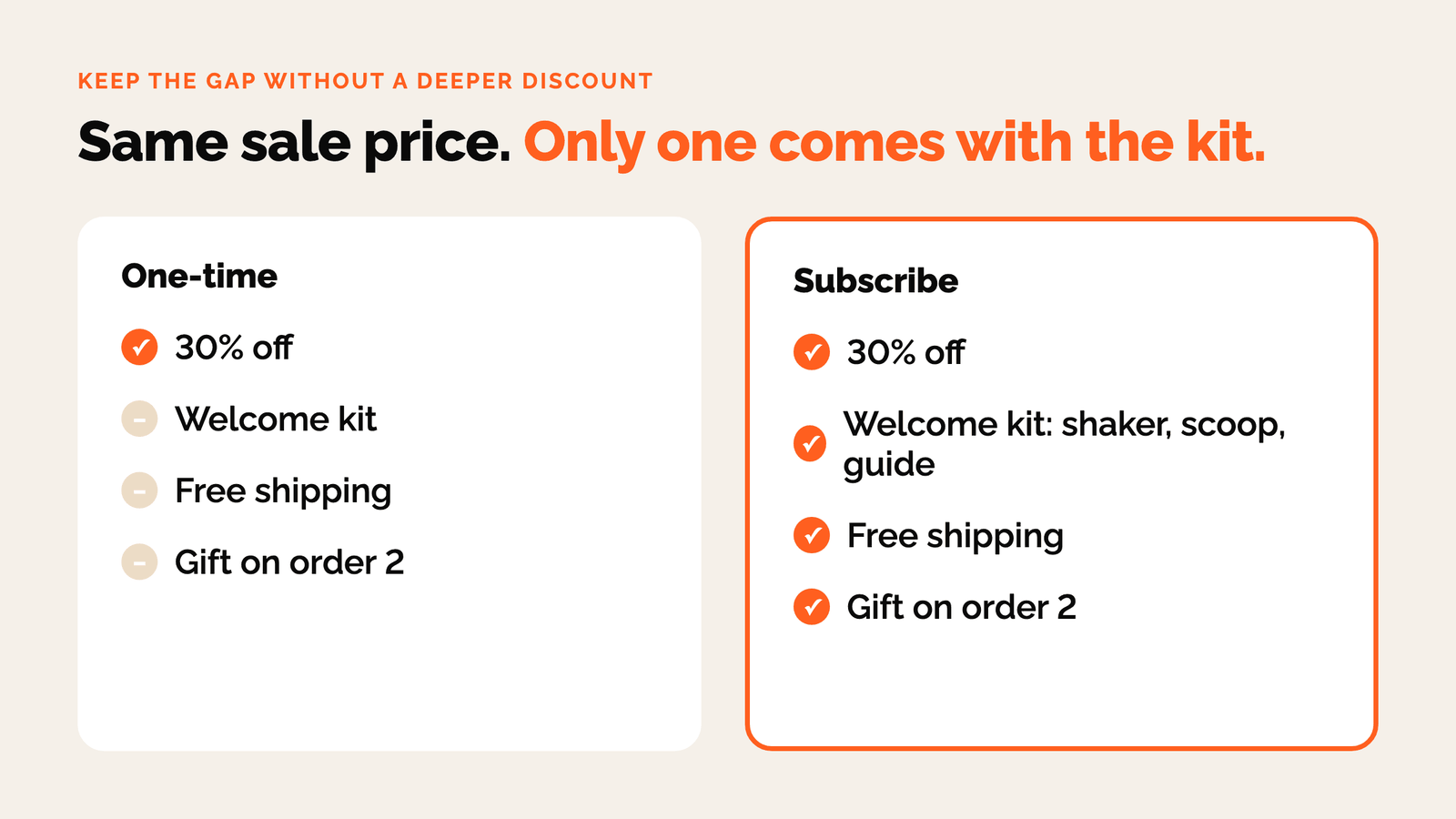
One-time gets the sale price. Subscription gets the sale price plus the kit.
It keeps the gap without a deeper discount.
4. Ask again after they pay
Anyone who bought one-time gets a one-click post-purchase offer to switch to subscription.
They already paid, so there’s no risk to the sale.
Mistake 2: Old subscribers cancel
You can take subscribers off the sale email. You can’t hide the site or the Instagram ad.
They see 50% off, cancel, buy at the sale price, and maybe come back.
As Matthew Holman put it: “Your 50% off sitewide sale will cancel your best customers.”
5. Give subscribers the sale first
A subscriber-only window, Nov 16 to 25.
Make it about their next order. “Add anything to your next box at 40% off.” One tap from the email, no login.
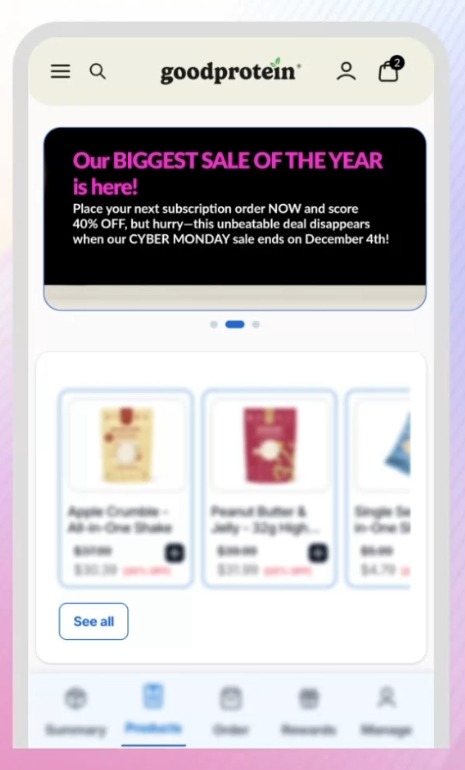
Good Protein did this in their portal. Add-ons went from 18% to 25% of subscription revenue in their BFCM month (via Loop).
6. Add a BFCM cancel reason
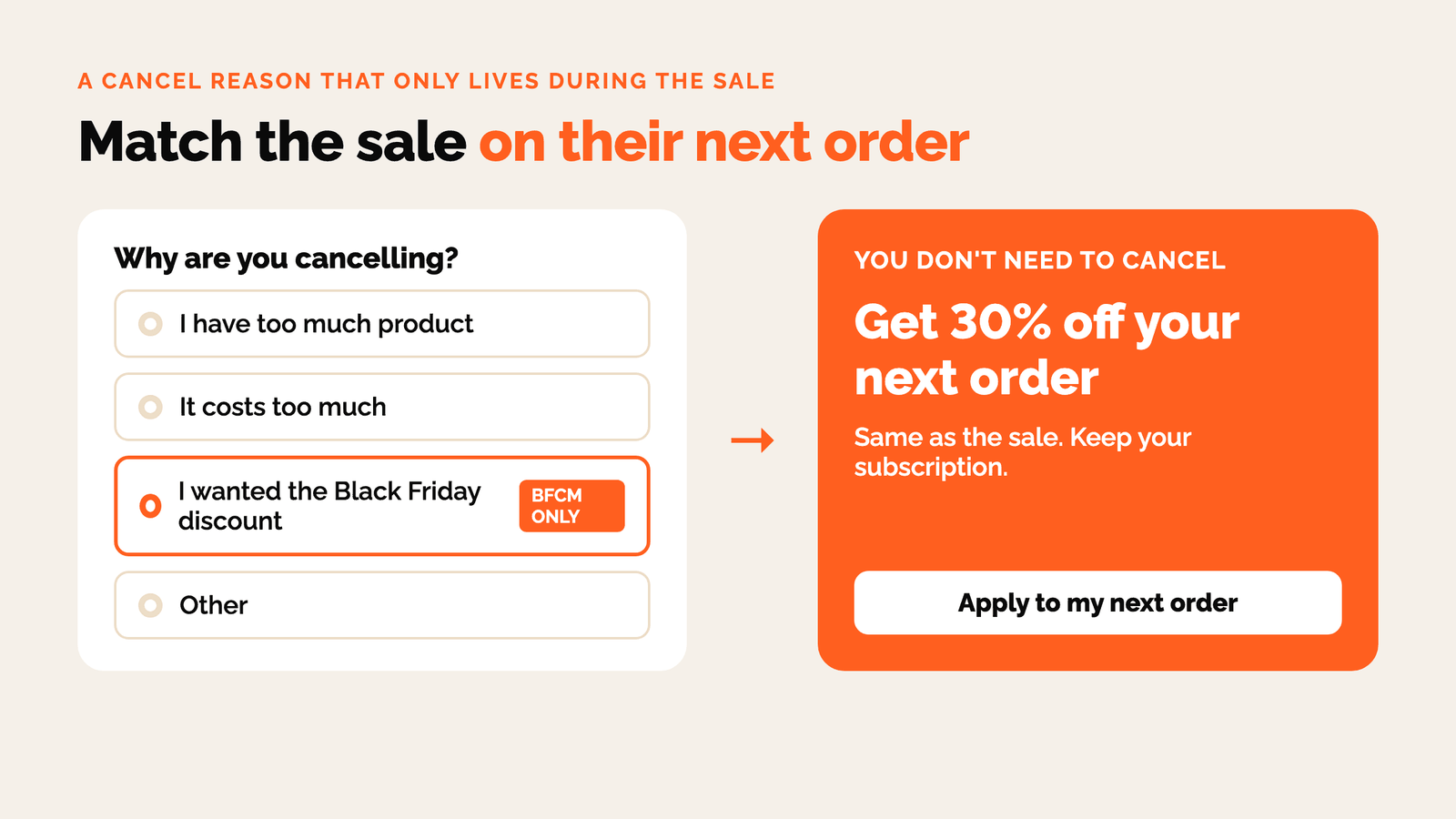
“I wanted the sitewide discount.” Match the sale on their next order, right there.
7. Take subscribers off every discount email
They already get a discount on every order. These are your most loyal customers, so don’t teach them to wait for a code.
Exclude them from every discount send, loyalty and points flows included.
After BFCM: December and January
Churn runs at 3.2% a month in November. In December and January it jumps to 4.1 to 4.3% (Churned, 2026 benchmark report).
8. Tag the new cohort, and give them nothing extra
Tag everyone who subscribed during the sale, so every flow and report can split them out.
When they try to cancel, offer a delay, a new frequency or a skip. No new discount.
“You got our best price of the year. It won’t come back until next November.”
9. Save payment retries for January, and ask for a backup card
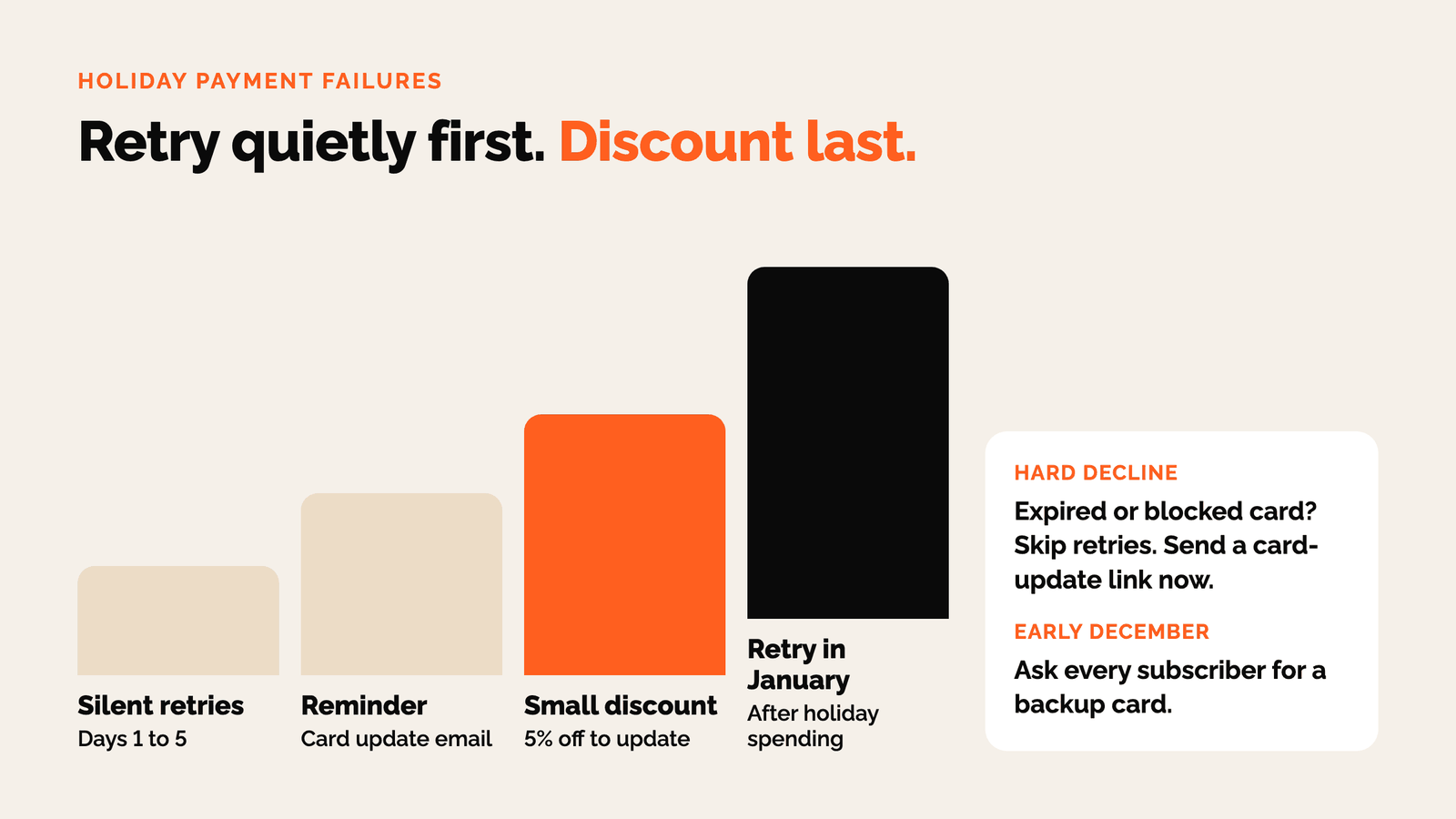
December spending empties accounts. Retry quietly first, then try again in January.
Ask every subscriber for a backup card in early December.
10. Judge BFCM at order 3, not the weekend
BFCM buyers tend to be your lowest-retention audience. Track their cohort and its retention separately.
Compare the BFCM cohort to an October cohort at day 30, 60 and 90.
Don’t make the same 2 mistakes as every other brand this BFCM. If you want help setting it up, book a call.
One email a week on subscription retention: the numbers, the strategy, and what to fix first.

Rahi Jain
Rahi Jain is a subscription LTV specialist who helps DTC brands maximize their LTV from subscriptions.
More about Rahi